Frequently Asked Questions — Flipchart Easel
What is a flipchart easel and how is it different from a whiteboard?
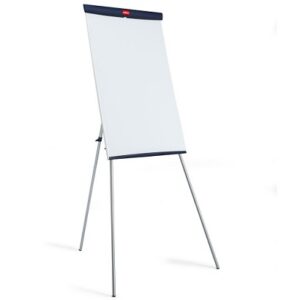
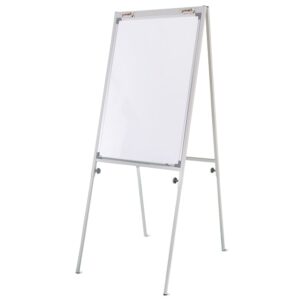
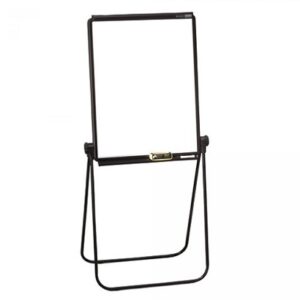
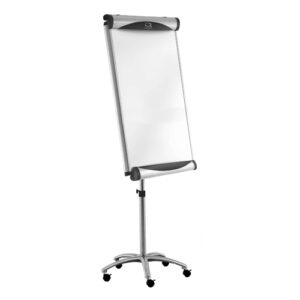
A flipchart easel is a standing frame that holds a large paper pad — typically A1 size — at a height that is comfortable to write on and visible to a room. You write on the top sheet with markers, and when it's full you flip it over the top rail to reveal a fresh blank sheet underneath. The key difference from a whiteboard is permanence: what you write on a flipchart stays on that sheet of paper, which you can tear off, display on a wall, photograph, or take away after the session. A whiteboard is erased and reused, which is more practical for ongoing daily use but doesn't preserve each session's output. Flipcharts are particularly popular in training, workshops, and facilitation settings for this reason.
What size paper pad does a flipchart easel use?
Most flipchart easels are designed for A1-size paper pads (594 × 841mm), which is the standard for office and training use in Malaysia. The pad clips or hooks onto the easel's top rail. Replacement pads are sold separately — when ordering refill pads, confirm that the pad dimensions match your easel model, as some easels have a specific clip or hook spacing that requires a matching pad width. We can advise on compatible pads for the easels we carry if needed.
When should I use a flipchart instead of a projector or screen?
A flipchart works best in small to medium group settings — typically up to 20 to 30 people — where interaction and live note-taking are more important than presenting pre-prepared slides. It's the go-to tool for workshops, brainstorming sessions, training programmes, and any meeting where the facilitator needs to capture and display ideas as they emerge from the group in real time. A projector or screen is better suited for larger audiences and for presenting structured, pre-prepared content. Many trainers use both — a projector for their prepared content and a flipchart for capturing live discussion and group input alongside it.
What markers should I use on a flipchart?
Use flipchart markers — also called water-based markers or presentation markers — not permanent markers and not dry-erase whiteboard markers. Flipchart markers are designed to write clearly on paper with enough ink flow to be visible from across a room, while being water-based so they don't bleed heavily through the paper onto the sheet underneath. Permanent markers can bleed through multiple sheets. Whiteboard markers have a solvent-based formulation designed for a non-porous surface and tend to look faded and streaky on paper. A good set of flipchart markers in black, blue, red, and green covers most training needs.
What is the difference between the Quartet models?
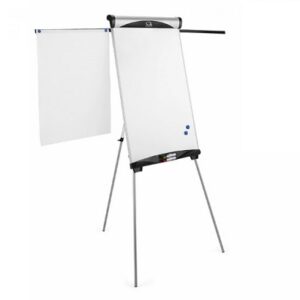
The Nautile is a compact, lightweight easel suited for smaller meeting rooms and occasional use. The EU500E is a mid-range model with a more stable tripod-style base and practical adjustments for height and angle. The Unimate 100TE adds a more robust frame construction and is well suited for regular training use. The EU2000TE is the top-of-range model with the most stable base, a larger writing area, and additional features like a built-in tray for markers — it's designed for professional trainers and facilitators who use a flipchart heavily and daily. If you run infrequent presentations, the economy or Nautile models are sufficient; if training is a core part of your work, the EU500E or above is worth the investment for its stability and durability.
Can a flipchart easel be folded and moved between rooms?
Yes — all flipchart easels are designed to be freestanding and portable. The legs fold flat for storage or transport, and most models are light enough to be carried by one person. Some higher-end models like the EU2000TE may be heavier due to their more robust construction, but they still fold down for moving. If you need to move the easel frequently between rooms or between locations, check the folded dimensions and weight of your chosen model to make sure it suits your situation. A wheeled carry case or trolley can also make regular transport more convenient for trainers who travel to different venues.