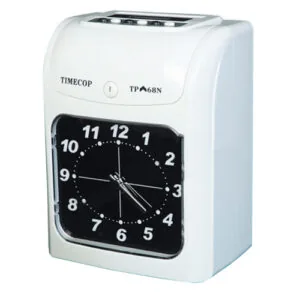
Analog time recorder

An analog time recorder — also commonly called a punch card machine or clock card machine — stamps the time and date onto a paper timecard when an employee inserts and presses it into the machine. No software, no network, no login required. The attendance record is the card itself, which supervisors can review and calculate hours from directly. It’s a straightforward system that has been running reliably in Malaysian factories, warehouses, and small businesses for decades.

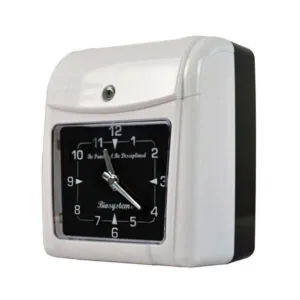
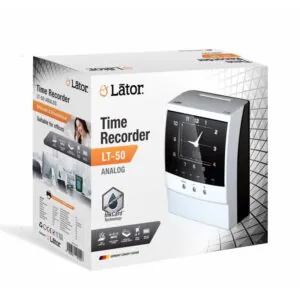
We carry 3 analog time recorders from RM450 to RM485: the Lator LT-50, TimeCop TP-68N, and BioSystem BX3300A. All three print the time stamp onto standard timecards and are suitable for workplaces that prefer a paper-based attendance system over digital or biometric alternatives. Browse the models below or contact us for help choosing. If you need a digital display model, see our digital time recorders.
Frequently Asked Questions — Analog Time Recorder

What is an analog time recorder and how does it work?
An analog time recorder is a mechanical clock-based machine that prints the current time and date onto a paper timecard. The employee inserts their card into a slot on the machine and presses down — the machine stamps the time automatically. The card typically has columns for morning in, morning out, afternoon in, and afternoon out, so each day's attendance is recorded in a row across the card. At the end of the week or month, supervisors collect the cards and manually calculate hours worked from the printed timestamps.
What is the difference between an analog and a digital time recorder?
Both analog and digital time recorders work the same way — the employee inserts a card and the machine stamps the time onto it. The difference is in how the internal clock is displayed and set. An analog model has a traditional clock face with hour and minute hands inside the machine, and the time is read mechanically to produce the printed stamp. A digital model has an electronic display showing the time in numbers, and the clock is set via buttons rather than by adjusting physical hands. The printed output on the timecard is the same format for both — date and time stamped in ink. The choice between the two is mainly personal preference and ease of time adjustment.
What timecards do these machines use?
Analog time recorders use standard paper timecards, typically available in weekly or monthly formats. The card size and column layout must match the machine model — not all cards are interchangeable across different brands. We supply compatible timecards for the models we carry. When ordering cards, always specify your machine brand and model to ensure the columns align correctly with the machine's print head position. Using the wrong card format results in timestamps falling outside the printed column lines, making records harder to read.
Is a punch card time recorder still a practical choice today?
For the right workplace, yes. A punch card system works well in environments with stable shift schedules, where attendance records don't need to be integrated into payroll software, and where management prefers a physical paper trail over a digital one. It requires no IT setup, no network connection, and no software licence. The main limitation is that calculating hours still has to be done manually from the cards — if you have a large workforce or variable shift patterns, the administrative overhead adds up. For smaller teams with fixed hours, it remains a reliable and cost-effective solution.
How do I set the time on an analog time recorder?
Analog time recorders have a manual time-setting mechanism, typically a knob or lever on the side or back of the machine that allows you to advance the clock hands to the correct time. Because it's a mechanical clock, you may need to adjust it periodically — especially after power interruptions, daylight saving changes, or if the machine runs slightly fast or slow over time. Refer to your specific model's manual for the exact procedure. If you're unsure, contact us and we can walk you through it.
What happens to the attendance records if there's a power cut?
Analog time recorders are primarily mechanical — the clock mechanism and the stamping action are driven by the machine's motor, which does require power to operate. If power is cut, the machine won't be able to stamp cards until power is restored. The timecards already stamped before the outage remain intact. Some analog models do not retain a battery backup for the clock.